
Hidden chemistry - plant compounds and their uses by Mandy den Elzen
For two years, Mandy den Elzen investigated the chemical compounds of 80 plant species and their historical uses, working from the garden of the Begijnhof in Breda. As an artist, she brings together botanical knowledge, historical sources, and research into the chemical properties of plants. Her curiosity is driven by what takes place within plants and by the ways in which people have used plants throughout the centuries.
Plants are sessile organisms and cannot flee from threats. To protect themselves, they produce chemical compounds that play a role in defence, communication, and interactions with other organisms. Bitter compounds, tannins, flavonoids, essential oils, and alkaloids are examples of these substances. Over the centuries, these properties have led to applications in food, personal care, and medicine.
The Begijnhof was founded in 1535. The Beguines tended gardens containing culinary herbs and medicinal plants and possessed extensive knowledge of their uses, which they also passed on to women from the surrounding area. In the exhibition, Den Elzen brings together a variety of plant species, each presented in a wooden case, accompanied by information about their chemical compounds and historical applications. In this way, the relationship between plant, chemical compounds, humans, and botanical knowledge becomes visible.
Mandy den Elzen (1981) works at the intersection of art, nature, and science. She is fascinated by nature and the ingenious processes that take place within it. In her artistic practice, she combines fieldwork and biological research with the collection and preservation of plant material.
‘Hidden chemistry – plant compounds and their uses by Mandy den Elzen’ is on view from 16 January to 2 May 2027.
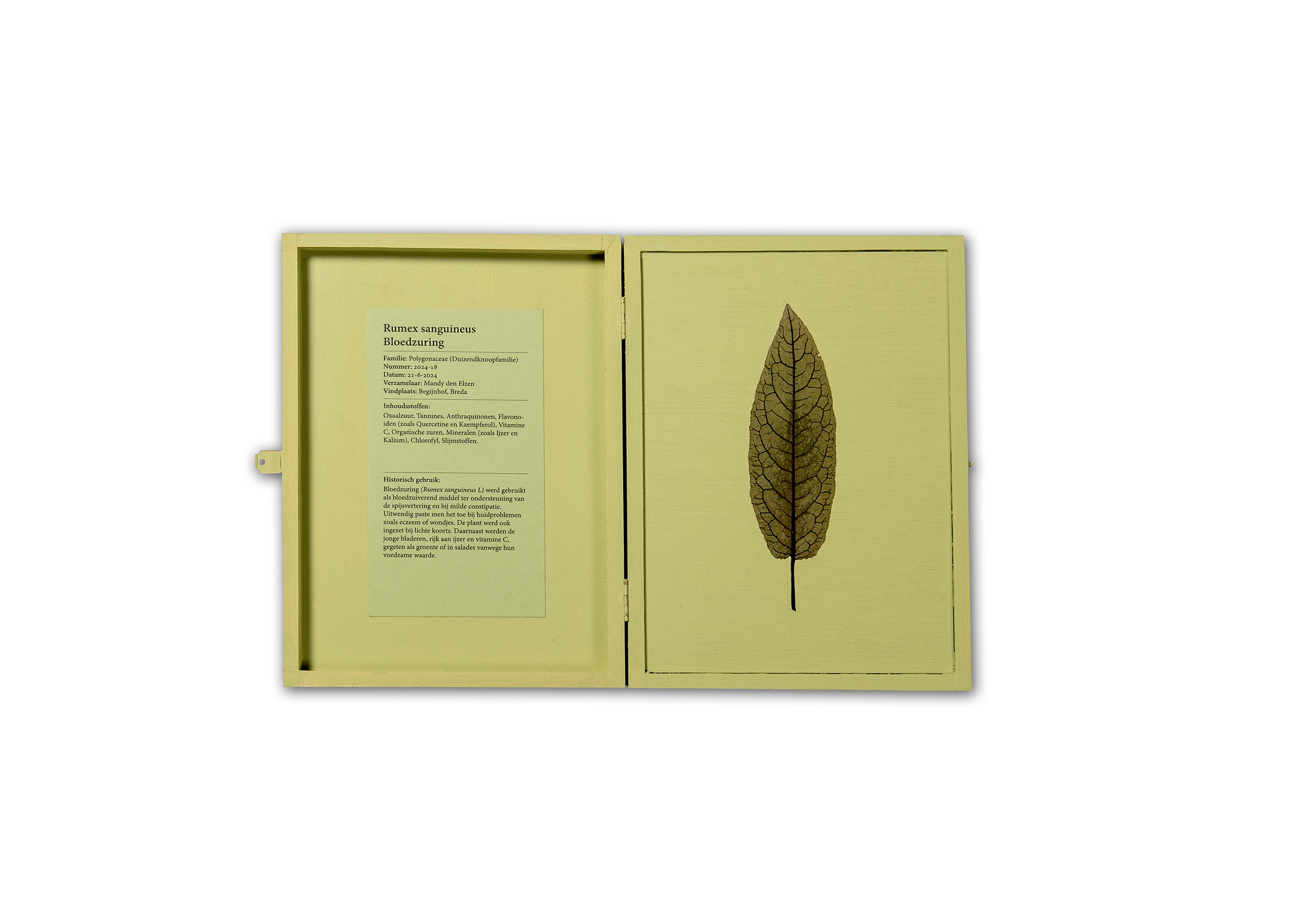
Wood dock. (Mandy den Elzen)
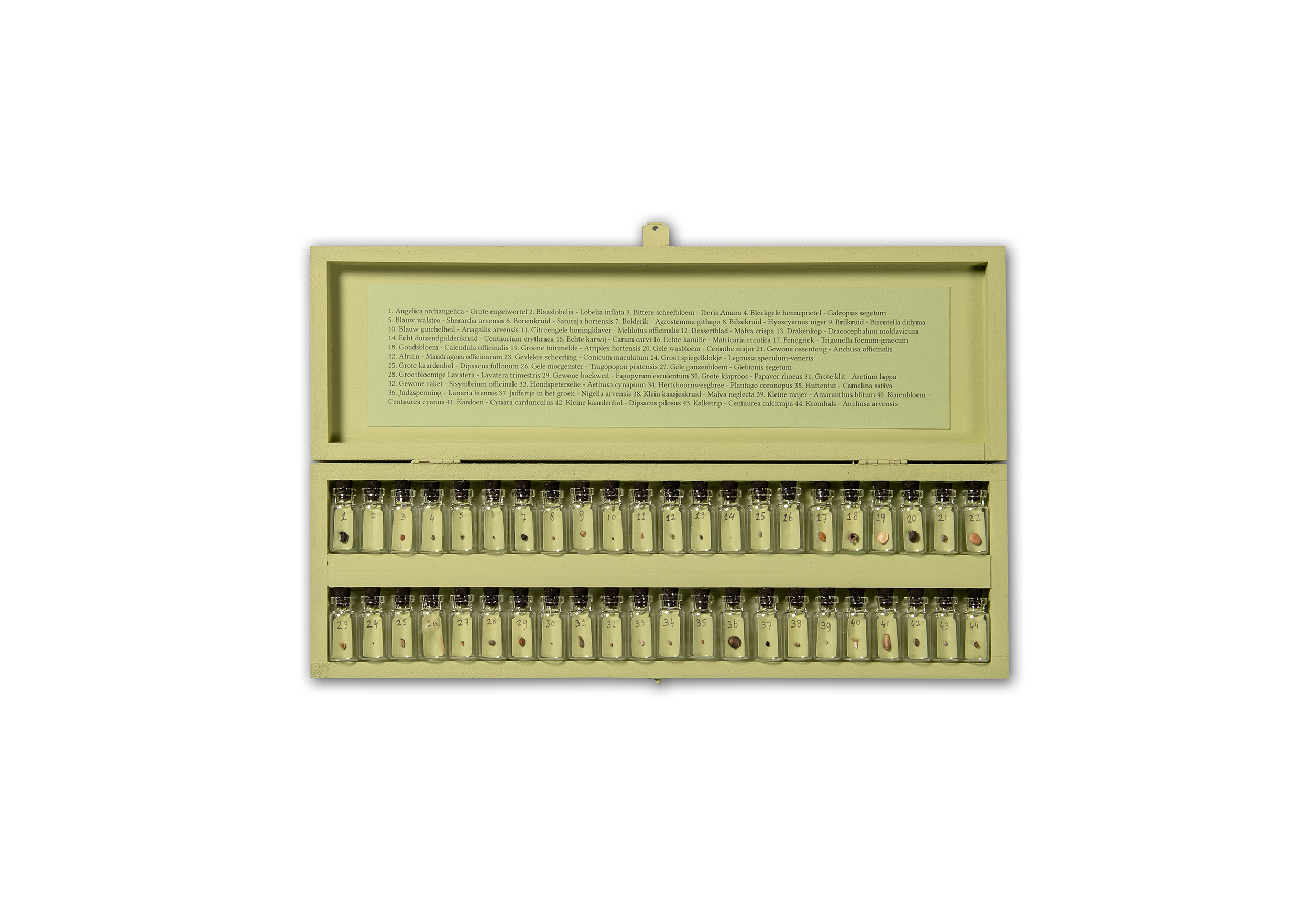
Seed archive. (Mandy den Elzen)